Showing posts with label accessories. Show all posts

Friday, January 27, 2012

Trove, Wildernis and Majesty

With the 'Open/Closed: A pop up gallery' coming up fast, I've decided to make a selection of hats and headdresses to be suspended from the ceiling/beams and hopefully to be interacted with by the private view guests. The latest additions to the collection are:

Trove

The original idea was to create a nest like base however I combined this with the cocoon habits of the caddisfly (in particular the project of the Hubert Duprat). Another influence was the bower bird, who collects coloured items to decorate a small area for the purpose of courtship, leading on to other birds with similar habits such as magpies. 


Wildernis

Dutch for Wilderness, this piece is a composite of large European bird feathers and pre printed butterflies from a book of cut out DIY mobiles.


Majesty

Majesty was made during my weekend stay in Southampton, though the influences for the piece can be found as far as the Democratic Republic of the Congo. Feather trim, leopard print button and gold chain form the majority and hopefully it's vaguely reminscent of a central African headpiece.


 Images by KLV

Tuesday, January 17, 2012

Stage Face - Colour Symbolism

Kathakali
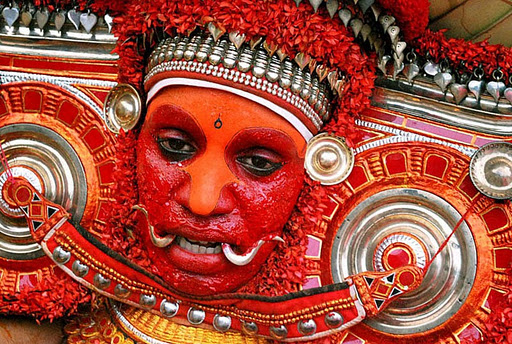
Kathakali originates in Kerela, India. It is a combination theatrical dance, song and mythology and is for the most part secular in that there is no connection with temple worship, though there are Hindu ritual and rebirth themes present. In Kathakali, the make up is the character and this particularly complex make up follows some of the following symbolism:

Green: Good
Red: Anger
Black: What is repellent
Yellow: Wonder
Eye makeup: Oval/lotus shapes for good , block/square for evil

The make up makes the character which makes the mood or abstract aspect of life


 Peking Opera

Now to East Asia and Peking Opera which has distant religious roots but is generally another secular entertainment. Characters are once again heavily defined by the the face and the expressions determined by mask and make up, from feminine gentleness to brutality. Artistically stylized designs are vital in Peking Opera to provide the audience with instantly recognisable characters and historic figures. Once again we have integral colour symbolism:

Gold: Divinity, supernatural beings
Yellow: The imperial colour, reticence (whole face)
Black: Impetuousness or (strict) law abiding
Red: Courage, loyalty, faithfulness
White: Brutality (whole face), scoundrel/clown (patch across nose & eyes)
Blue: Cruelty
Green: Demon/devil


Sunday, January 15, 2012

Made in the Congo

The images and quotes below are from my newly acquired copy of 'Royal Museum for Central Africa - Collections of the RMCA. Headdresses'. (Thanks again Katie)

As the 11th biggest country in the world, it is no surprise that the range of traditional headwear in the the Democratic Republic of the Congo is as vast as the place itself. As with other cultures, headdresses in the DRC are symbols of power and an accumulation of wealth with materials such as cowries, which arrived from colonial exchange, being displayed on the person to indicate their value. Materials used varies incredibly from feathers to hides as well as bone, teeth and hair, presented as tribute to chiefs and kings of various hierarchies. This book doesn't merely show examples of DR Congolese headdresses but gives details of their significance to the wearer, as well as specific back stories where available. These headpieces are then grouped by material, ethnic group/religion, region and context. 

Lega - The Bwami society

The eastern DR Congolese Lega people often belonged to the political, religious and social structure known as Bwami, the initiation ceremony of which was 'viewed as an organised form of resistance by certain colonial administrators.' The basic materials worn by entrance level initiates of Bwami consisted of fibres, cowries and leather but these caps were worn underneath more complex headdresses as the candidate progresses through the initiation. The spectacle of the final rank in Bwami society fascinates me, as the 'Kindi' (highest rank) are the only members permitted to wear elephant tail, hornbill beak and possibly eland hide. Infact at this level of Bwami, it's possible that personal taste defined the selection of adornment.

 
It appears to me that the more complete and grand the animal part used, the closer the wearer is to the force of nature and therefore to power. This book confirms this as well as delving into more specific symbolism for example the elephant tail which being 'a herd animal, symbolised solidarity among Bwami members.'


 Feathers


Unconfirmed origin but almost certainly from the DRC, red jungle fowl feathers used. 


This headdress was worn for Likita dances and ceremonies. The feathers are fishing owl combined with rhinoceros beetle thorax


Giant blue turaco and hornbill feathers worn by men of the Mungongi society amongst the Yaka and Pende peoples


 Luba grey parrot/grey woodpigeon headdress. This piece is particularly interesting due to the sheer volume of parrot feathers for a start, over 500, which would have used the tail feathers of around 50 birds. Though frequently used, Luba headdresses like these are rarely photographed. The unobtainability of the materials used benefited the courts of the Luba Kingdomthrough use of ritual and sway over conquered regions and trading partners.


Luba grey parrot/assorted goose and duck feathers (left), Mangbetu headdress with various guinea fowl and eagle owl feathers


Animal hide


Goat hide Ngundu headdress and silver monkey Egbaka headdress


Leopard scalp headdress, possibly from Bwami society


Pangolin headdress, DRC


Though I have posted some of my favourite animal based headdresses above, 'Royal Museum for Central Africa - Collections of the RMCA. Headdresses' contains many more. Details of the collectors are provided alongside the controversy of their collector or looter status, combined with information of the 'Scramble for African Art' to give readers another dimension to the collection. Not only does the book touch on animal symbolism it also delves into anti-colonial headdresses that contrast with western influenced designs. This publication is ideal for anyone interested in anthropology, hats/headdresses or many aspects of African culture.
Naranza and the Terrible Lizards

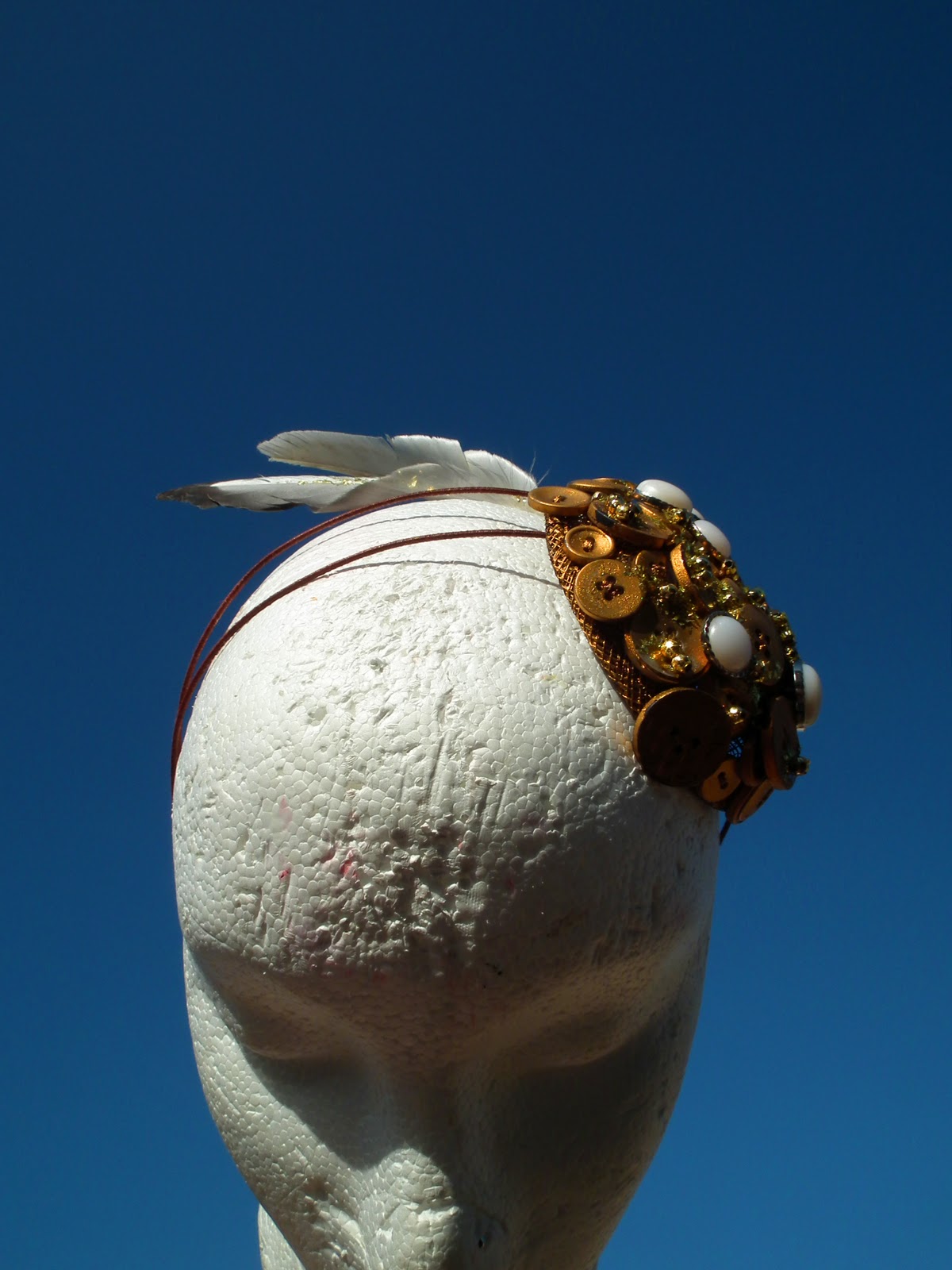
The Naranza (Venetian for Orange) hairband was made as a gift and is a combination of similar feathers that I've used before, the orange/black tipped feathers being the main interest. Another gift was my first pair of earrings where I used the nostalgic (for me) plastic dinosaurs that I've previously featured on a hairband.


Images by KLV

Saturday, January 7, 2012

Christophe Coppens

Promotional fashion videos by Christophe Coppens

'The Collector' evokes thoughts of animal, anatomy, myth and the macabre.
'Women of the Fields' (feat. Roisin Murphy). Think adornment, rurality, nature and ritual.


 Various Coppens works


Tuesday, January 3, 2012

The NYE Post

This NYE consisted of drinking, dancing, seeing old friends and acquaintances whilst dressed in smart attire with parrot feathers upon my head. The theme was Hollywood and it took place at the Cygnet Hotel, a place that I must have passed thousands of times in my life but never thought I'd spend NYE there. Saying that I was expecting a good night and these expectations were surpassed, one of the better nights to see in the new year. 

Happy New Year..


 Images by KLV